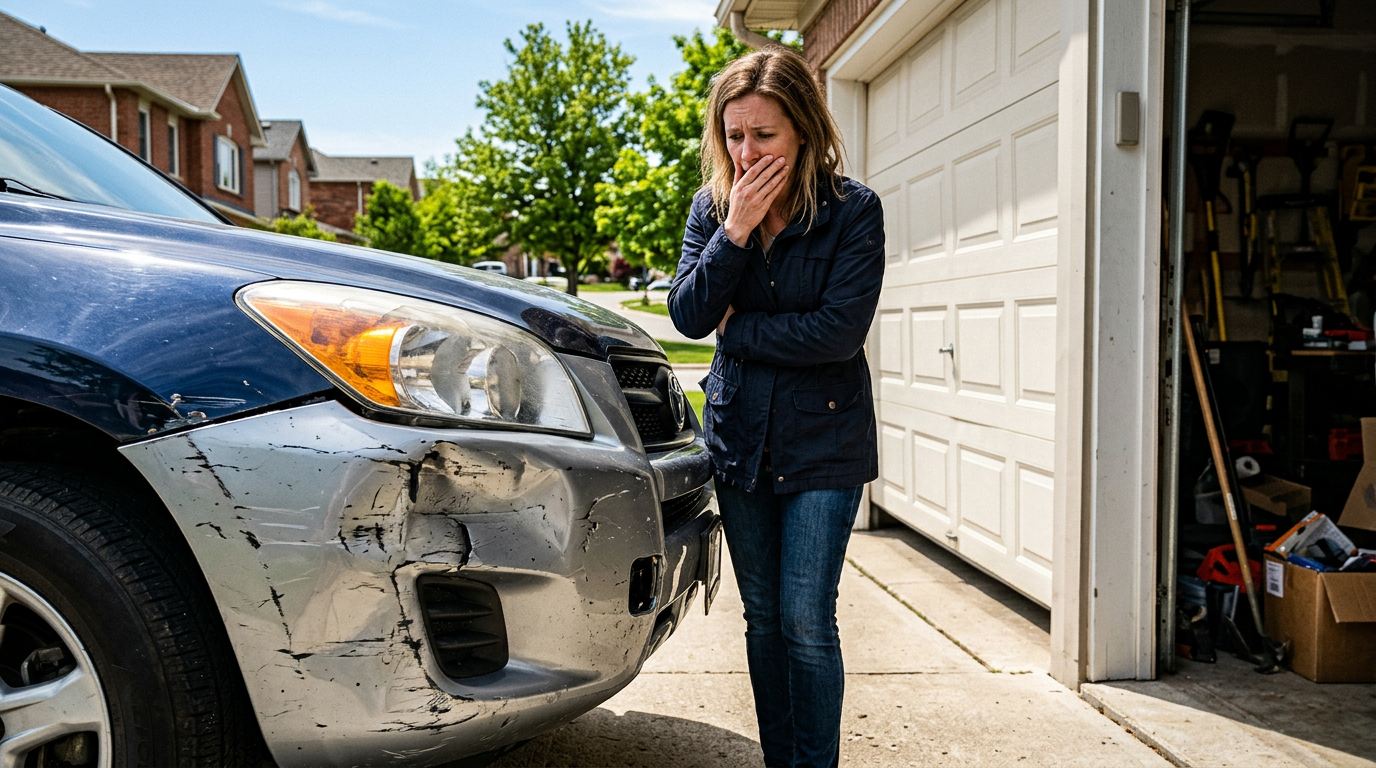
A car hitting a garage door can feel like a small disaster, but the right next steps can protect your home, your safety, and your wallet. This guide explains what to do immediately after the impact, how to assess the damage, and when a fast repair is the smartest choice.
What to do first
The first priority is safety. If the door is stuck, hanging crooked, or making unusual noises, keep everyone away from it and do not try to force it open or closed.
Follow these steps right away:
-
Turn off the garage door opener.
-
Check for broken glass, bent panels, loose parts, or cables that have come off track.
-
Make sure no one is standing under the door.
-
If the vehicle is still touching the door, do not reverse or move it until you know the door is stable.
-
If you smell burning, see sparks, or notice electrical damage, keep the area clear and call for help.
If the impact was hard enough to bend the track, break the spring system, or damage the opener arm, the door may be unsafe to use until it is inspected.
Why garage doors fail after impact
Garage doors are built to move smoothly under controlled tension, so even a moderate hit can throw the system out of alignment. A dented panel may look minor, but the real problem is often deeper inside the door’s structure or hardware.
Common damage includes:
-
Bent tracks that stop the rollers from moving properly.
-
Broken springs that leave the door too heavy to lift.
-
Damaged hinges or rollers that cause shaking or grinding.
-
Misaligned panels that create gaps or seal problems.
-
Opener arm damage that prevents the motor from working correctly.
In many cases, the door will still look partially functional while hiding a serious safety issue. That is why a quick inspection matters.
How to inspect the damage
Once the area is safe, do a simple visual check from a distance. Look at the door while it is fully closed and again while it is partially open, but only if it moves smoothly and does not jam.
Check for these warning signs:
-
The door sits unevenly or leans to one side.
-
One panel is crushed, cracked, or folded.
-
The tracks are bent, separated, or pulled away from the wall.
-
The door makes scraping, popping, or grinding sounds.
-
The opener runs, but the door barely moves.
-
The seal at the bottom no longer touches the floor evenly.
If any of these are present, stop using the system until a professional evaluates it. A door that seems “almost fine” can suddenly fail when under tension.
When repair is possible
Not every garage door hit means full replacement. If the damage is limited to a single panel, a hinge, or a roller, repair may be the best solution.
Repair is often possible when:
-
The door panels are dented but not severely warped.
-
The track is only slightly bent.
-
The opener still works and the motor has not been stressed.
-
The springs and cables are intact.
-
The frame and opening are still square.
A trained technician can tell whether the door can be repaired safely or whether replacing damaged sections is the better long-term option. In Phoenix, heat and sun exposure can also make older doors more fragile, so a damaged door may not recover well if it was already worn.
When replacement makes more sense
Sometimes the cost of fixing multiple parts is close to the cost of installing a new door. That is especially true if the impact caused structural damage, safety concerns, or repeated mechanical problems.
Replacement may be the better choice if:
-
Several panels are crushed or separated.
-
The door is older and parts are hard to match.
-
Springs, tracks, and the opener system are all damaged.
-
The door no longer seals properly and lets in dust or hot air.
-
The repair would only be a short-term fix.
A new door can improve safety, insulation, curb appeal, and everyday performance. For homeowners planning to stay in the house, that can be a smart investment.
What Phoenix homeowners should know
Phoenix weather adds stress to garage doors over time. High heat can wear down seals, affect finish quality, and make older components brittle faster than many homeowners expect.
That matters after an impact because:
-
Metal parts may already be weakened from long-term sun exposure.
-
Seals can dry out and crack, making alignment problems worse.
-
Heat can put extra stress on the opener and moving parts.
-
Dust and debris can make damaged tracks or rollers fail faster.
If your garage door already had a few issues before the accident, the collision may expose them. A local repair team that understands Phoenix conditions can often spot those issues more quickly.
What not to do
After a garage door is hit, a few common mistakes can make the problem worse. Even a well-intended quick fix can create more damage or injury risk.
Avoid these actions:
-
Do not force the door open or closed.
-
Do not try to straighten bent tracks with household tools.
-
Do not disconnect springs or cables on your own.
-
Do not keep using an opener that sounds strained or skips.
-
Do not assume a small dent means the door is safe.
Garage doors use high tension parts, and those parts can be dangerous when damaged. A professional repair is the safer path.
Insurance and documentation
If the car hit the garage door during a parking mistake, teen driver incident, or guest accident, documentation can help with the claims process. Take clear photos before anything is moved, if it is safe to do so.
Capture:
-
The full front view of the door.
-
Close-ups of dents, cracks, and broken hardware.
-
The vehicle position and any visible damage.
-
The opener and track area.
-
Any debris or separated pieces on the floor.
Keep your repair estimate and any receipts together. This can help you explain the damage clearly to an insurer and speed up the claim review.
How a repair visit usually works
A proper garage door inspection starts with checking the door’s balance, alignment, and hardware condition. The technician will look at the springs, rollers, tracks, cables, panels, and opener to find both visible and hidden damage.
A typical repair visit may include:
-
Removing unsafe tension from damaged components.
-
Replacing bent or broken parts.
-
Realigning the track and door sections.
-
Testing the balance and movement.
-
Confirming the opener works safely with the repaired door.
This process is important because the visible dent is not always the real problem. The repair has to restore safe movement, not just make the door look better.
Why fast service matters
A damaged garage door can leave your home exposed, interrupt access to your vehicle, and create a security risk. The longer the door stays damaged, the more likely it is that the issue will spread to other parts of the system.
Fast repair helps prevent:
-
Further bending of the tracks.
-
Extra wear on the opener motor.
-
A door getting stuck half open.
-
Water, dust, or pests getting into the garage.
-
A sudden failure while the door is moving.
That is why a same-day or next-day response is often worth it after an impact.
Why homeowners choose High Grade Garage Doors
If your garage door has been hit, you need a company that responds quickly and fixes the problem the right way. High Grade Garage Doors helps Phoenix homeowners restore safety, function, and peace of mind after accident damage.
For fast help, call High Grade Garage Doors at (602) 837-1888. Their team can assess the damage, explain your options clearly, and help you decide whether repair or replacement is the better move.
Frequently asked questions
Can I still use my garage door after a car hit it?
Only if a professional confirms it is safe. If the door is bent, noisy, uneven, or stuck, stop using it until it is inspected.
Is a dented garage door panel always a full replacement?
No. A single panel or hardware piece may be repairable if the rest of the system is intact and the door is still structurally sound.
How long does garage door repair take?
Simple repairs can often be completed in one visit. More severe damage may require parts ordering or full replacement.
Should I call insurance first or the repair company first?
If the garage door is unsafe or stuck open, call a repair company first. After that, document the damage and contact your insurer if needed.