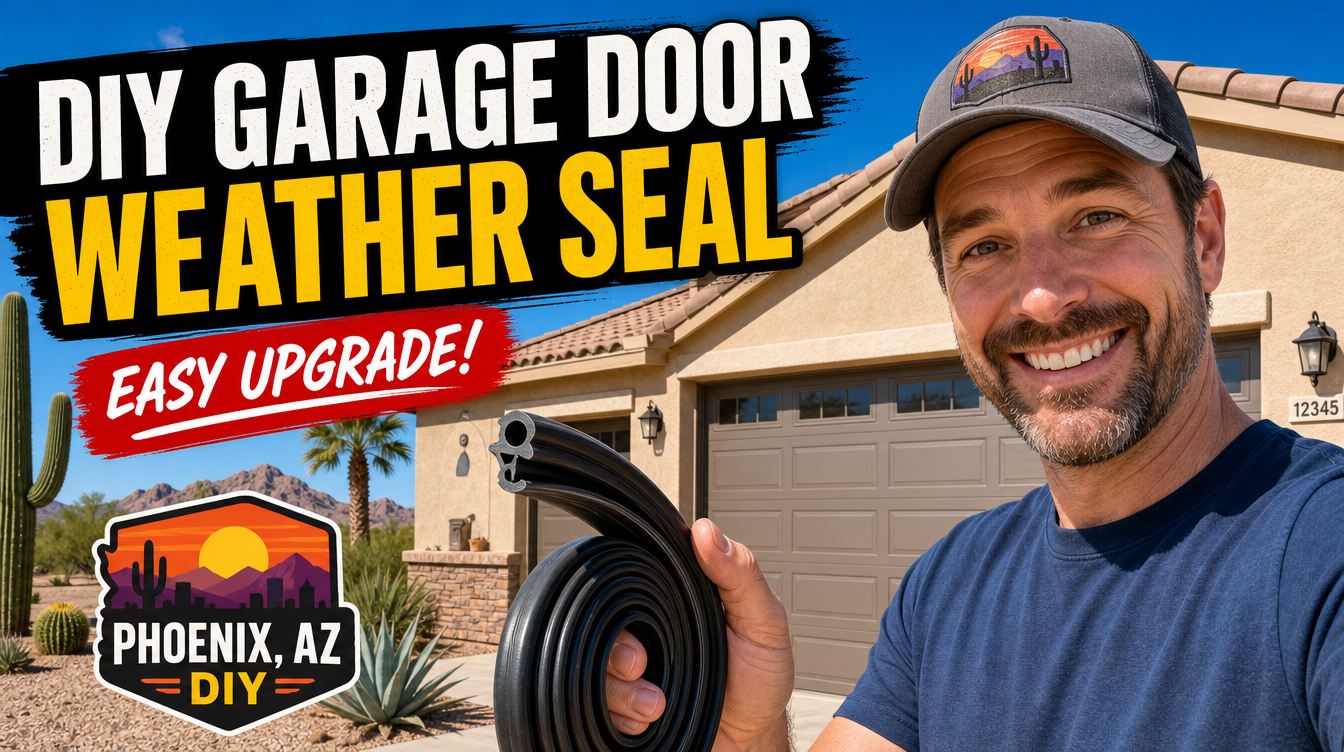
If your garage feels hotter than the rest of your home, lets in dust, or invites pests inside, the weather seal may be the reason. Replacing a worn garage door seal is a simple upgrade that can improve comfort, protect your garage, and help your door work more efficiently.
Why the Weather Seal Matters
The weather seal is the flexible barrier along the bottom or edges of your garage door that helps close the gap between the door and the floor or frame. In Phoenix, where heat, dust, and dry conditions are constant, this seal does more than most homeowners realize. It helps keep out blowing debris, insects, water from storms, and hot air that can raise the temperature inside the garage. A damaged seal can also create small gaps that allow your garage to become an entry point for unwanted pests and moisture.
Signs Your Seal Needs Replacement
A worn seal usually gives clear warning signs if you know what to look for. Common indicators include visible cracks, flattening, tearing, or sections that no longer sit tightly against the floor. You may also notice daylight under the door, increased dust inside the garage, more insects around the opening, or a garage that feels unusually hot or windy. If the door rumbles more than usual when closing or the seal looks brittle and stiff, it is probably time for replacement.
Problems a Bad Seal Creates
A failing weather seal causes more than cosmetic issues. It can let dust settle on tools, vehicles, and stored items, which is especially frustrating in a desert climate. It can also allow scorpions, spiders, roaches, and other pests to enter more easily through small openings. In some cases, gaps can permit water intrusion during monsoon season, leading to slippery floors, mildew, or damage to items stored in the garage. Over time, the extra exposure can also make the garage door system work harder by losing some of its insulation barrier.
Best Time to Replace It
In Phoenix, the best time to replace a weather seal is before the hottest months or before storm season begins. Many homeowners wait until the problem becomes obvious, but replacing the seal early can prevent bigger issues later. If your garage is attached to the home, a weak seal can also affect indoor comfort by allowing heat to transfer into nearby rooms. Replacing it sooner rather than later is a low-cost improvement that can save frustration throughout the year.
What a Proper Replacement Involves
A quality replacement starts with identifying the right seal type for your garage door. Not all seals are the same, and the material must match the door style and the gap size. The old seal is removed carefully, the track or retainer is cleaned, and the new seal is installed so it sits evenly across the bottom of the door. The goal is a tight but smooth fit that blocks outside elements without causing the door to drag or bind. After installation, the door should close cleanly and maintain a consistent seal across the full width.
Can You Replace It Yourself?
Some homeowners can replace a simple bottom seal on their own, especially if the door uses a standard retainer system. However, many garage doors have seals that are harder to remove, harder to match, or connected to components that need careful handling. If the seal is installed incorrectly, it can leave gaps, wear out faster, or interfere with the door’s movement. For homeowners who want a dependable result without guessing on parts or fit, professional replacement is often the safer choice.
Why Phoenix Homes Need Extra Attention
Phoenix homes face weather conditions that can wear seals faster than in milder climates. Constant sun exposure, extreme heat, dust storms, and dry air can make rubber and vinyl crack or shrink over time. Monsoon rains add another reason to maintain a proper seal, since water can enter through even small gaps near the floor. Because of these local conditions, garage door seals in the Phoenix area often need more frequent inspection than homeowners expect.
Choosing the Right Service
When selecting a garage door company, look for one that understands local conditions and can recommend the correct seal for your specific door. A good service provider should inspect the full door bottom, side gaps, and floor condition before replacing anything. They should also check whether the door is sitting level, because a seal alone cannot fix a misaligned door. The best results come from combining the right seal with proper adjustment, so the garage is protected from dust, heat, and pests.
Maintenance Tips After Replacement
Once your new seal is installed, a little maintenance can help it last longer. Keep the area at the base of the door clean so dirt and debris do not wear down the material. Check the seal every few months for cracking, flattening, or gaps, especially after extreme heat or heavy storms. If you notice the seal starting to pull away, replacing it early can prevent damage to the retainer and reduce the chance of bigger repairs later.
When to Call a Pro
You should call a professional if the seal keeps coming loose, if the floor is uneven, or if the door does not close flush after replacement. You should also get help if your garage door is older and uses a specialty seal that is difficult to source or install correctly. A trained technician can identify whether the issue is only the seal or whether the door needs alignment, spring adjustment, or track correction as well. That kind of inspection can save time and help prevent repeated repairs.
Local Help in Phoenix
For homeowners in Phoenix, a reliable weather seal replacement is one of the easiest ways to improve garage comfort and protection. If your garage is dusty, hot, or vulnerable to pests, the seal may already be failing even if the door still opens and closes normally. A timely replacement can make a noticeable difference right away. For trusted local service, contact High Grade Garage Doors at 602-837-1888 for garage door weather seal replacement in Phoenix, AZ.