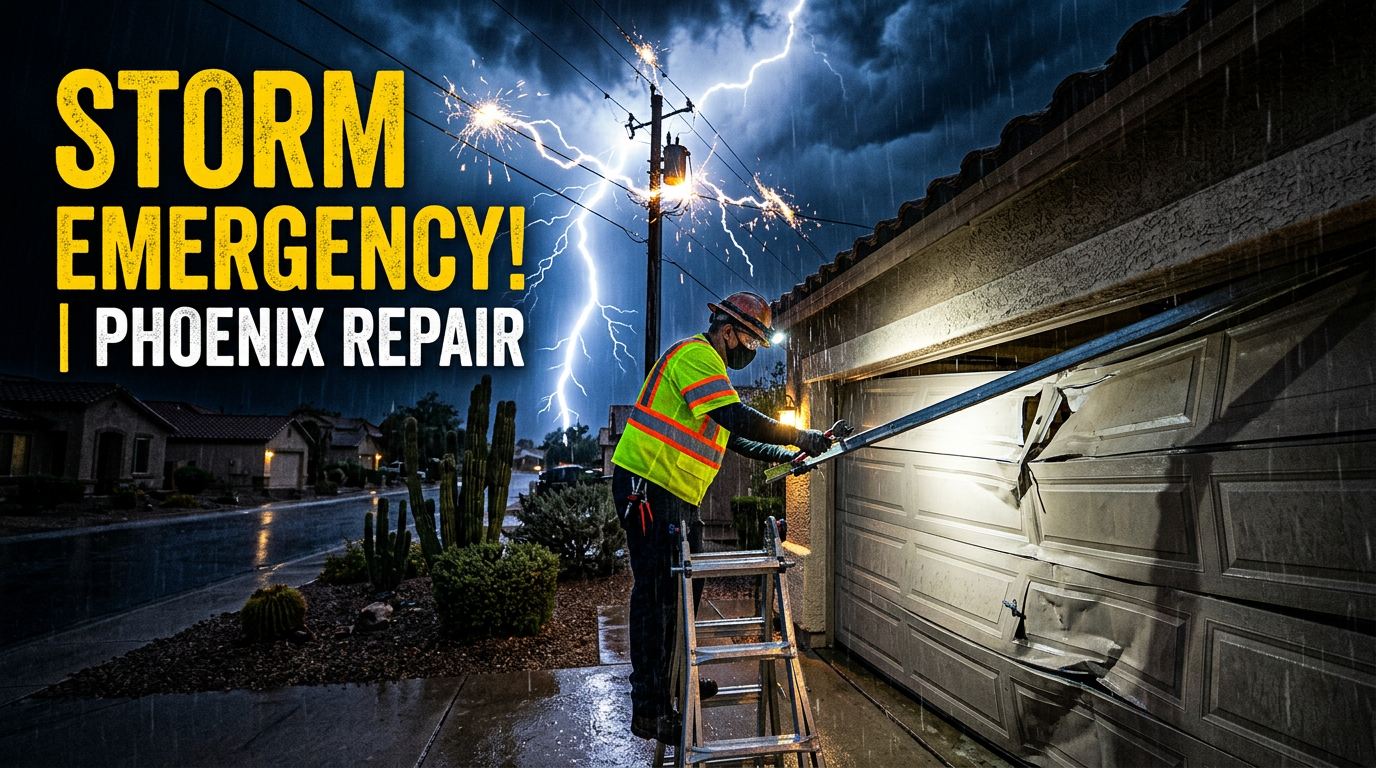
Power outages are more common than most Phoenix homeowners realize. Summer heat storms, electrical grid stress, and sudden weather changes can all cut power to your home—and your garage door opener. When the lights come back on, you might discover your garage door won’t open or close, leaving you stranded or unable to access your vehicle.
Understanding what happens to your garage door during and after a power outage, how to troubleshoot it safely, and when to call a professional can save you time, frustration, and even costly damage. This guide walks you through everything you need to know about garage door repair after power outages specifically in Phoenix, AZ.
Why Power Outages Disrupt Garage Door Openers
Garage door openers are electric devices that rely on consistent power to function. When electricity is cut:
-
The opener loses its ability to receive remote or wall-button signals
-
Internal electronics may reset or malfunction
-
Safety sensors can lose calibration
-
The motor may stall in an unsafe position
Even after power returns, many openers don’t automatically resume normal operation. Some require manual reprogramming, while others may have suffered damage from the sudden loss or surge of electricity.
In Phoenix, where temperatures soar and electrical demand peaks during summer, power disruptions are frequent enough that every homeowner with an electric garage door opener should be prepared.
Common Signs Your Garage Door Needs Repair After a Power Outage
After your power comes back, check for these warning signs:
If you notice any of these issues, your garage door likely needs professional inspection and repair.
Step-by-Step: Troubleshooting Your Garage Door After Power Returns
Before calling a repair service, try these safe troubleshooting steps:
1. Check the Power Source
Ensure the opener is plugged in firmly and the outlet is working. Test the outlet with another device like a lamp.
2. Reset the Opener
Most openers have a reset procedure:
-
Unplug the unit for 30 seconds
-
Plug it back in
-
Press the wall button to see if it responds
3. Reprogram Your Remote
Power loss can erase remote codes:
-
Locate the “learn” button on the opener (usually near the light)
-
Press and hold until the light blinks
-
Press your remote button within 30 seconds
4. Inspect Safety Sensors
The small sensors near the floor must be aligned:
-
Ensure both lenses are clean
-
Make sure nothing blocks the beam
-
Check that the indicator lights are on (usually green)
5. Test Manual Operation
Use the emergency release cord to disconnect the opener and lift the door manually. If it’s heavy or stuck, the issue may be with the springs or tracks—not the opener.
⚠️ Important: If the door feels unusually heavy, do not force it. Garage door springs are under extreme tension and can cause serious injury if mishandled.
When Troubleshooting Isn Enough: Call a Professional
If the above steps don’t restore function, you likely have a deeper issue that requires professional repair. Common problems include:
-
Damaged opener motor or circuit board – Often caused by power surges
-
Broken springs – Power outages don’t cause this, but manual operation afterward can stress weakened springs
-
Misaligned tracks – Door may have jammed when power failed
-
Worn gears – Grinding noises indicate internal gear damage
These issues require specialized tools and expertise. Attempting DIY repairs on springs, cables, or internal motor components can lead to injury or further damage.
Phoenix-Specific Factors That Increase Garage Door Risk
Phoenix homeowners face unique challenges that make garage door problems more likely after power outages:
1. Extreme Heat Stress
Summer temperatures over 100°F put extra strain on garage door motors and electronics. Heat already weakens components, making them more vulnerable to power disruptions.
2. Frequent Storms
Monsoon season brings sudden electrical storms that can cause grid fluctuations and outages across the city.
3. Older Electrical Infrastructure
Some Phoenix neighborhoods have aging electrical systems prone to surges when power returns after an outage. These surges can damage sensitive opener electronics.
4. High-Usage Garage Doors
Many Phoenix homes use their garage as the primary entrance, meaning doors open and close dozens of times daily. This frequent use accelerates wear, increasing failure risk after power issues.
Preventing Future Garage Door Problems After Power Outages
You can protect your garage door system with these proactive measures:
Install a Surge Protector
Plug a surge protector between your opener and the outlet to shield electronics from power spikes when electricity returns.
Use a Battery Backup Opener
Many modern openers include battery backup systems that keep the door functional during outages.
Schedule Regular Maintenance
Annual inspections by a professional technician can identify weak springs, worn gears, or failing electronics before they cause emergencies.
Keep the Emergency Release Cord Accessible
Know how to manually disconnect your opener so you can operate the door during power losses.
The Safety Risks of Ignoring Garage Door Issues After Power Loss
Ignoring a malfunctioning garage door isn’t just inconvenient—it’s dangerous:
-
Stranded vehicles: You may be unable to leave for work or emergencies
-
Security vulnerabilities: A door that won’t close properly exposes your home to theft
-
Spring failure risk: Weak springs can snap suddenly, causing heavy doors to crash down
-
Sensor malfunctions: Misaligned sensors may fail to detect people or objects, creating collision hazards
Early repair prevents these risks and ensures your garage door operates safely and reliably.
How Long Does Garage Door Opener Repair Take?
Most opener repairs after power outages are completed within 1–2 hours, including:
-
Diagnostic inspection
-
Component replacement (if needed)
-
Testing and calibration
-
Safety sensor alignment
Spring or track repairs may take slightly longer, but experienced technicians can handle most issues in under 3 hours.
Cost of Garage Door Repair After Power Outages in Phoenix
Repair costs vary based on the problem:
These prices assume standard residential doors. Heavy wooden doors or high-cycle commercial openers may cost more.
Why You Should Choose Local Phoenix Experts for Garage Door Repair
Working with a local Phoenix garage door company offers distinct advantages:
-
Faster response times: Local technicians can arrive quickly for emergency repairs
-
Knowledge of area-specific issues: They understand how Phoenix heat, storms, and electrical patterns affect garage doors
-
Established trust: Local businesses rely on community reputation and verified reviews
-
Warranty support: In-person service guarantees are easier to honor than remote companies
Recommended Garage Door Repair Service in Phoenix, AZ
If your garage door isn’t working after a power outage, don’t risk injury or further damage with DIY attempts. Contact High Grade Garage Doors, Phoenix’s trusted local expert for garage door repair after power outages.
📞 Call now: (602) 837-1888
📍 Service area: Phoenix, AZ and surrounding communities
⭐ Why choose us:
-
Fast emergency response
-
Certified technicians with years of experience
-
Transparent pricing with no hidden fees
-
Full warranty on parts and labor
-
Knowledge of Phoenix-specific garage door challenges
High Grade Garage Doors specializes in opener repairs, spring replacements, sensor alignments, and full system diagnostics. Whether your door won’t open, won’t close, or makes strange noises, our team will get it working safely and reliably.
Final Thoughts: Don’t Wait Until It’s Too Late
Power outages are inevitable in Phoenix, but struggling with a broken garage door afterward isn’t necessary. With proper troubleshooting, preventative measures, and timely professional repair, you can keep your garage door functioning smoothly year-round.
When troubleshooting fails or you notice serious symptoms like grinding noises, heavy doors, or unresponsive openers, call High Grade Garage Doors immediately. Our experienced team provides fast, reliable, and affordable garage door repair after power outages across Phoenix, AZ.
📞 Call today: (602) 837-1888
Your garage door’s safety and your home’s security depend on it.
Absolutely — I’ll rewrite it to sound more natural, helpful, and reader-friendly while keeping strong on-page structure, clear local relevance, and trust-building content for Google-friendly quality.
Garage Door Insulation Benefits for Arizona Summers
Arizona summers are brutal, and if you have ever stepped into your garage in July, you already know how intense the heat can get. For many homeowners, the garage becomes one of the hottest areas of the property, making it uncomfortable to use and adding extra strain on the home’s cooling system. What many people do not realize is that the garage door itself is often a major reason for that heat buildup.
A garage door takes up a large portion of the front of your garage. When it is not insulated, it allows outside heat to pour in and trap itself inside. That heat can spread into nearby rooms, raise indoor temperatures, and force your air conditioner to work harder than necessary. In Arizona, where summer temperatures can stay extreme for months, garage door insulation is not just a nice upgrade. It can make a real difference in comfort, efficiency, and long-term value.
Why Garage Door Insulation Matters in Arizona
Arizona homes face unique heat challenges. The strong sun, dry climate, and long summer season create conditions where garages can become dangerously hot. This is especially true for attached garages, where excess heat can move through shared walls and affect the rest of the house.
Insulation helps slow the transfer of heat. Instead of letting hot air and radiant heat move directly through the garage door, insulated materials create a barrier that helps keep interior temperatures more stable. This does not turn your garage into an air-conditioned room by itself, but it can greatly reduce the heat buildup that makes garages miserable during the summer.
For homeowners who store tools, equipment, household items, or even use the garage as a workspace, this upgrade can be especially valuable.
How an Uninsulated Garage Door Affects Your Home
Many people think of the garage as separate from the house, but in reality, it can have a direct impact on indoor comfort. If your garage is attached, the heat that builds up inside can affect adjoining walls, ceilings, and rooms.
This can lead to several common problems:
-
Higher temperatures in rooms next to or above the garage.
-
Increased air conditioning use during the summer.
-
Hotter indoor areas that are harder to keep comfortable.
-
More wear on your HVAC system over time.
-
Heat damage to items stored in the garage.
If you have ever noticed that a bedroom above the garage gets hotter than the rest of the house, poor garage insulation may be part of the problem.
Main Benefits of Garage Door Insulation
Insulating your garage door offers more than just a cooler garage. It can improve several parts of your home environment at once.
Better Temperature Control
The most immediate benefit is reduced heat inside the garage. Insulation helps block some of the outdoor heat from entering and slows how quickly the inside space heats up.
This can make a noticeable difference during peak afternoon hours, especially when the garage door faces direct sunlight.
Improved Energy Efficiency
When less heat enters the garage, less heat transfers into your home. That means your air conditioning system may not have to work as hard to keep indoor temperatures steady.
Over time, this can help reduce cooling costs, especially during Arizona’s longest and hottest months.
More Comfortable Living Spaces
Attached garages often share walls with bedrooms, laundry rooms, mudrooms, or family spaces. By reducing garage heat, insulation can help these nearby rooms feel more comfortable and consistent.
This is important for families who struggle with hot spots in the home during summer.
Protection for Storage
Garages often hold valuable or sensitive items, including:
-
Power tools
-
Paint and chemicals
-
Holiday decorations
-
Sports equipment
-
Car batteries
-
Electronics
Extreme heat can shorten the life of many stored items. A better-insulated garage helps reduce those temperature extremes.
Quieter Door Operation
Insulated garage doors are usually more solid than non-insulated ones. That added density can reduce rattling, vibration, and outside noise.
This can be a nice bonus if you have bedrooms near the garage or use the garage early in the morning or late at night.
Stronger Door Construction
Many insulated garage doors are built with multiple layers, which makes them sturdier than basic single-layer doors. This added strength can improve durability and help the door hold up better over time.
Signs Your Garage Door May Need Insulation
If you are unsure whether this upgrade is worth it, there are a few signs to watch for.
You may benefit from garage door insulation if:
-
Your garage feels much hotter than the outside air.
-
Rooms near the garage are difficult to cool.
-
Your current garage door is thin metal with no backing.
-
You notice your garage stays hot well into the evening.
-
You use the garage for storage, hobbies, or work.
-
Your summer energy bills feel higher than expected.
In Arizona, even a well-built home can struggle if the garage door is allowing excessive heat inside every day.
Insulated Door vs. Insulation Add-On
Homeowners usually have two options when improving garage door insulation: adding insulation to an existing door or replacing the door with a new insulated model.
Adding Insulation to an Existing Garage Door
This option can work well if your current garage door is still in good shape. Insulation kits or custom-installed materials can improve performance without requiring a full replacement.
This may be a good choice if you want a more budget-friendly upgrade and your door is structurally sound.
Replacing with a New Insulated Garage Door
A new insulated garage door often delivers the best results. These doors are built with insulation already inside the panels, creating stronger thermal performance and a cleaner finished look.
A replacement may be the better option if:
-
Your current door is older or damaged.
-
The door is noisy or inefficient.
-
You want better curb appeal along with improved comfort.
-
You are looking for a longer-term solution.
What Type of Insulation Works Best?
Not all garage door insulation is the same. The right choice depends on the age of the door, your budget, and how much heat protection you want.
Common insulation materials include:
-
Polystyrene, a rigid foam material often used in garage door panels.
-
Polyurethane, a dense foam that offers stronger insulating performance.
-
Reflective insulation, which can help reduce radiant heat in some applications.
For Arizona’s extreme summer heat, higher-performing insulation usually delivers better long-term results. Just as important as the material itself is the quality of the installation. Gaps, poor sealing, or improper fit can reduce effectiveness.
Extra Ways to Keep a Garage Cooler
Garage door insulation works best when combined with other smart improvements. If you want better summer performance, consider these additional steps:
-
Replace worn weather seals around the garage door.
-
Seal gaps where hot air can enter.
-
Add insulation to garage walls or ceiling if needed.
-
Improve ventilation inside the garage.
-
Avoid leaving the garage door open during the hottest part of the day.
-
Consider lighter exterior colors that reflect more heat.
These upgrades can work together to make your garage more usable and help reduce the extreme temperature swings common in Arizona.
Is Garage Door Insulation Worth It?
For many Arizona homeowners, the answer is yes. While insulation does involve an upfront cost, the value can show up in several ways over time. You may enjoy better comfort, lower energy use, quieter operation, and improved protection for the things you keep in your garage.
It can also make a practical difference if your garage is attached to your home and contributes to uneven indoor temperatures. In a climate as hot as Arizona, upgrades that reduce heat transfer often pay off in comfort alone.
Why Professional Installation Makes a Difference
Garage door systems need to stay balanced, safe, and fully functional. That is why professional installation is often the smarter route. An experienced garage door specialist can recommend the right insulation solution based on your door type, garage layout, and summer heat exposure.
Professional service also helps ensure:
-
Proper fit and finish
-
Safe door operation
-
Better long-term performance
-
Correct sealing around edges and panels
A poorly installed insulation system may not deliver the results you expect and could affect the way the door opens and closes.
Choose High Grade Garage Doors for Expert Help
If your garage turns into a heat trap every summer, you do not have to keep putting up with it. Garage door insulation can help create a more comfortable space, reduce heat transfer into your home, and improve the overall performance of your garage.
High Grade Garage Doors helps Arizona homeowners choose practical, lasting solutions for hot-weather garage problems. Whether you need insulation added to an existing door or want to explore a new insulated garage door, professional guidance can help you make the right decision for your home.
Call High Grade Garage Doors today at (602) 837-1888 to discuss your options and schedule service.