Your garage door is one of the largest moving components of your home. Many homeowners use it several times every day without thinking about the hundreds of moving parts working together behind the scenes. Springs, cables, rollers, tracks, hinges, sensors, and the garage door opener all play an important role in safe operation.
In Phoenix, Arizona, extreme summer temperatures, dust, monsoon storms, and daily use can accelerate wear on garage door components. Regular garage door safety inspections help identify small problems before they become expensive repairs or potential safety hazards.
Whether your garage door is brand new or more than a decade old, scheduling routine inspections and performing simple visual checks can help extend its lifespan while keeping your family safe.
Why Garage Door Safety Inspections Matter
A garage door can weigh between 150 and 400 pounds depending on the material and size. Modern doors include safety features designed to prevent accidents, but those systems require periodic inspection and maintenance.
A professional garage door safety inspection can help identify:
- Worn torsion or extension springs
- Loose or damaged hardware
- Bent or misaligned tracks
- Worn rollers
- Frayed lifting cables
- Improper door balance
- Faulty safety sensors
- Garage door opener issues
- Weather seal deterioration
- Excessive vibration or unusual noises
Finding these issues early often prevents more significant repairs later.
Arizona Weather Can Affect Garage Door Performance
Living in Phoenix means your garage door experiences some of the harshest weather conditions in the country.
Extreme Heat
Summer temperatures regularly exceed 110°F. Constant exposure to heat may affect:
- Lubricants drying out
- Rubber weather seals cracking
- Plastic components becoming brittle
- Garage door opener electronics operating under additional stress
Dust and Desert Debris
Fine desert dust can accumulate inside tracks, rollers, hinges, and moving parts. Excess buildup increases friction and may cause unnecessary wear.
Monsoon Season
Strong winds, blowing debris, and sudden storms may affect:
- Track alignment
- Door balance
- Exterior panels
- Safety sensor positioning
Routine inspections help ensure your garage door continues operating safely throughout the year.
Components Every Safety Inspection Should Include
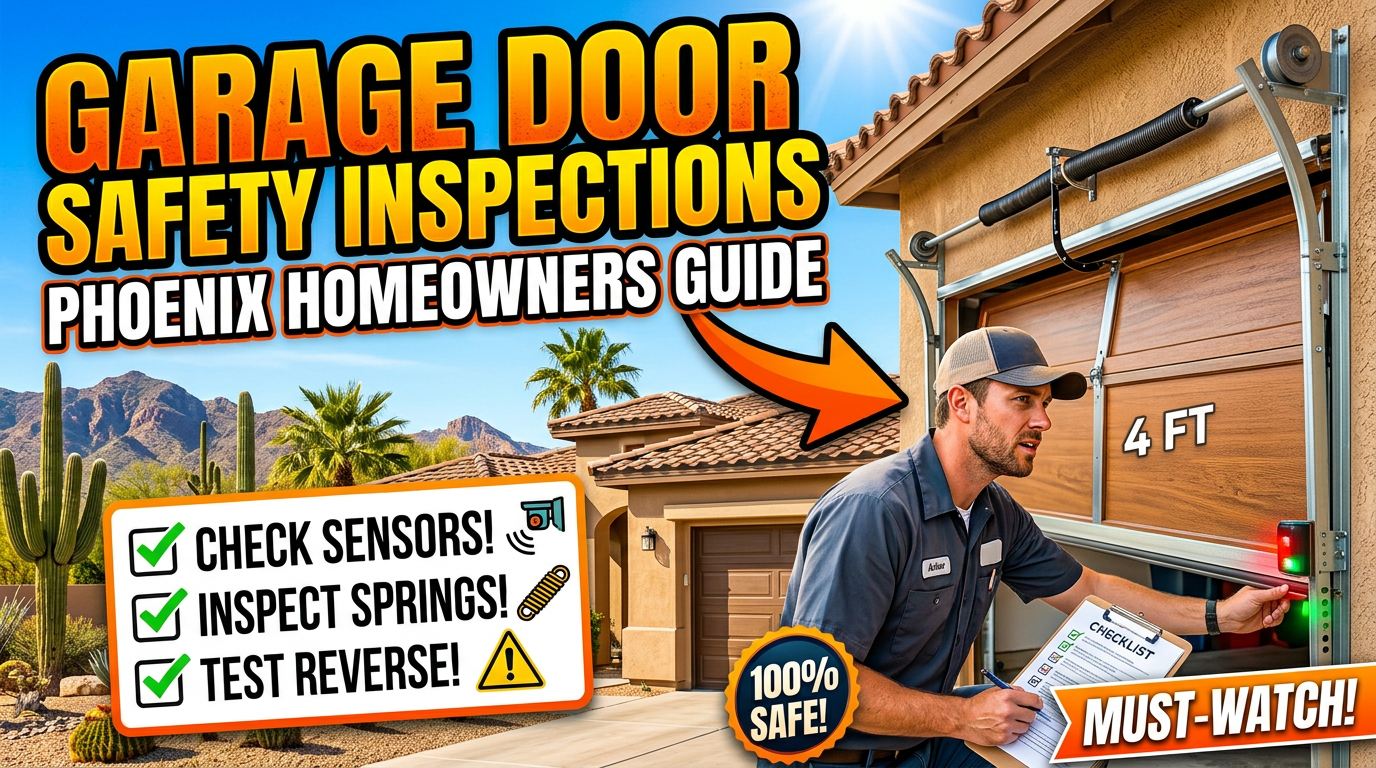
1. Garage Door Springs
Garage door springs support most of the door’s weight.
Inspect for:
- Rust
- Gaps in the spring
- Uneven tension
- Visible damage
Never attempt to repair or replace springs yourself because they are under extremely high tension.
2. Garage Door Cables
Lifting cables work together with the springs.
Look for:
- Frayed strands
- Rust
- Loose attachment points
- Uneven winding
Damaged cables should always be replaced by trained professionals.
3. Rollers
Rollers help the garage door move smoothly along the tracks.
Signs of worn rollers include:
- Loud squeaking
- Flat spots
- Cracks
- Excessive wobbling
Replacing worn rollers improves both safety and performance.
4. Tracks
Garage door tracks should remain straight and securely fastened.
Check for:
- Dents
- Bent sections
- Loose mounting brackets
- Dirt buildup
Misaligned tracks may cause the door to bind or come off track.
5. Hinges and Hardware
Daily operation gradually loosens bolts and brackets.
Inspect:
- Hinges
- Brackets
- Fasteners
- Mounting hardware
Loose hardware can affect door alignment and create unnecessary stress on moving parts.
6. Safety Sensors
Modern garage doors include photo-eye safety sensors near the floor.
Test them by placing an object beneath the closing door.
The garage door should immediately reverse when the beam is interrupted.
If it doesn’t, the sensors should be inspected before continuing to use the door.
7. Garage Door Opener
The opener should operate smoothly without excessive vibration or unusual noises.
Check:
- Remote controls
- Wall control
- Emergency release
- Drive system
- Mounting brackets
An annual inspection helps identify potential issues before failure occurs.
8. Door Balance
A properly balanced garage door reduces strain on the opener.
Disconnect the opener using the emergency release.
Lift the door halfway.
A balanced door should remain in position without drifting up or falling down.
An unbalanced door often indicates spring adjustment is needed.
Warning Signs That Should Never Be Ignored
Many homeowners notice small changes before a larger problem develops.
Common warning signs include:
- Door opens unevenly
- Loud grinding noises
- Jerking movement
- Slow operation
- Garage door won’t fully close
- Door reverses unexpectedly
- Crooked movement
- Visible cable damage
- Bent tracks
- Broken rollers
Ignoring these symptoms can increase repair costs and create safety risks.
Garage Door Maintenance Between Professional Inspections
Homeowners can safely perform several routine maintenance tasks.
Keep Tracks Clean
Remove dirt, leaves, and debris.
Avoid applying grease inside tracks.
Lubricate Moving Parts
Use garage door lubricant on:
- Hinges
- Rollers
- Bearings
- Springs (light coating)
Proper lubrication reduces friction and noise.
Inspect Weather Seals
Weather stripping helps:
- Keep dust out
- Improve energy efficiency
- Reduce water intrusion
- Protect stored belongings
Replace damaged seals when necessary.
Listen During Operation
A garage door usually provides early warning signs.
Pay attention to:
- New noises
- Vibrations
- Delayed movement
- Uneven travel
Addressing small issues early often prevents larger repairs.
Garage Door Safety Tips for Families
Garage doors should always be treated as heavy machinery.
Important safety reminders:
- Never allow children to play with garage door controls.
- Keep remotes out of reach of young children.
- Stay clear of moving doors.
- Never walk underneath a moving garage door.
- Test safety sensors regularly.
- Avoid attempting spring or cable repairs yourself.
- Schedule inspections if anything seems unusual.
These simple precautions can help prevent accidents.
How Often Should a Garage Door Be Inspected?
For most Phoenix homeowners, a professional safety inspection once each year is recommended.
Homes with higher daily usage or older garage doors may benefit from inspections every six months.
Routine inspections are especially valuable before the extreme summer heat and after monsoon season.
Benefits of Regular Garage Door Safety Inspections
Routine inspections provide several long-term advantages:
- Improved family safety
- Longer garage door lifespan
- Better opener performance
- Reduced unexpected breakdowns
- Quieter operation
- Early detection of worn components
- Lower long-term repair costs
- Reliable daily operation
Preventive maintenance is generally more affordable than emergency repairs.
Frequently Asked Questions
Can I inspect my garage door myself?
Homeowners can perform basic visual inspections and routine maintenance, but spring, cable, opener, and balance adjustments should be handled by trained professionals.
How long does a garage door safety inspection take?
Most inspections take between 45 minutes and one hour, depending on the condition and size of the door.
What is the most common garage door safety issue?
Worn rollers, loose hardware, damaged springs, and misaligned safety sensors are among the most common problems found during inspections.
Should I replace my garage door opener if it still works?
Not necessarily. A professional inspection can determine whether the opener is operating safely and whether replacement is recommended based on age, condition, and performance.
Final Thoughts
A garage door is a major investment and one of the most frequently used systems in your home. Regular safety inspections help ensure every component continues working properly while reducing the likelihood of unexpected failures.
For Phoenix homeowners, routine inspections are especially important because of Arizona’s intense heat, dust, and seasonal weather conditions. Identifying worn components early can improve safety, extend the life of your garage door, and help avoid costly repairs.
Need a Professional Garage Door Safety Inspection?
If you’re looking for a professional garage door safety inspection, new garage door installation, garage door opener service, or general garage door maintenance, High Grade Garage Doors proudly serves homeowners throughout Phoenix and surrounding communities.
Our experienced team carefully inspects every major component, verifies proper operation, and helps identify potential issues before they become larger problems.
High Grade Garage Doors
Phone: (602) 837-1888