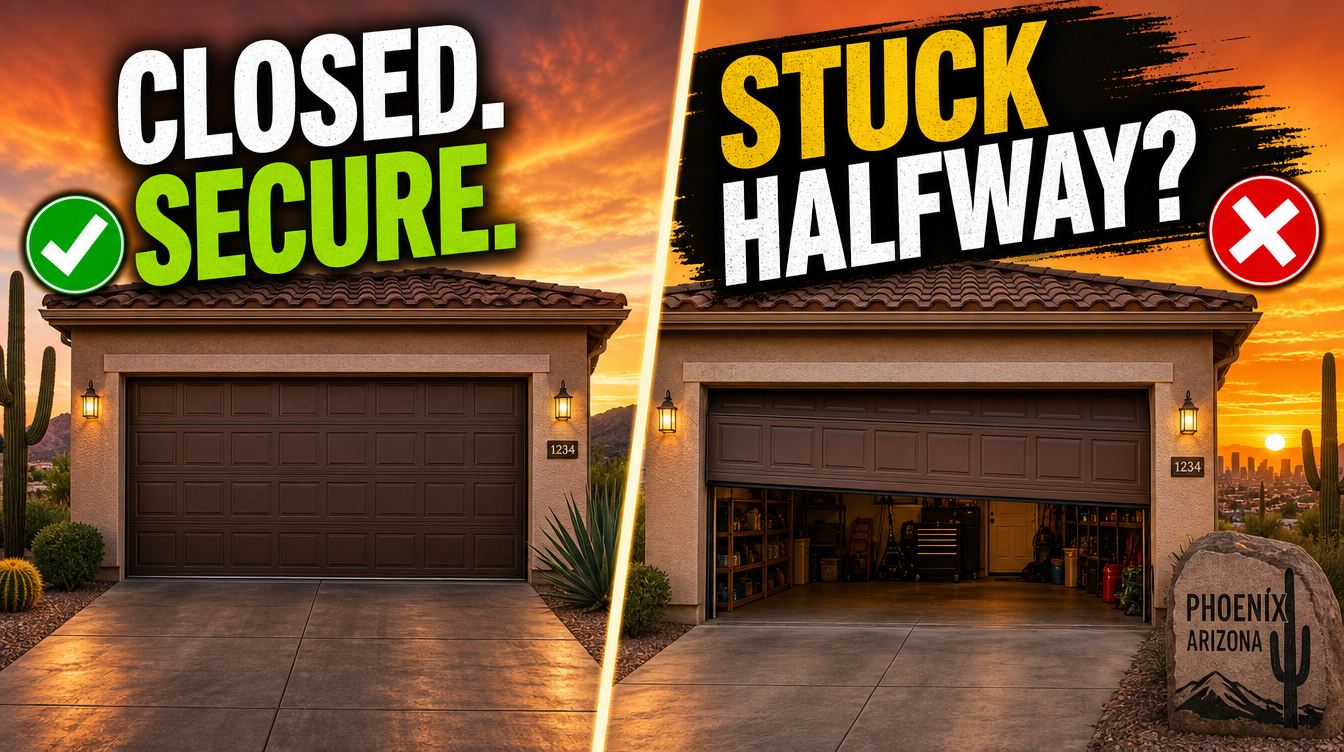
A garage door that will not close all the way is more than an inconvenience. In Phoenix, heat, dust, sunlight, and worn parts can all contribute to the problem, and in some cases the issue can also affect home security and energy efficiency.
If your garage door starts closing and then reverses, stops partway down, or leaves a gap at the bottom, there are a few common causes to check before assuming the system needs major repair. Understanding those causes can help you decide whether it is a quick fix, a maintenance issue, or a problem that needs professional attention.
Common Reasons a Garage Door Stops Short
Several parts of a garage door system can cause incomplete closing. The most common issues include misaligned safety sensors, obstructions in the track, damaged rollers, incorrect opener settings, and worn springs or cables. In Phoenix, extreme temperatures can also affect metal parts, lubricant performance, and electronic components.
The good news is that many of these problems start small. A sensor that is slightly dirty or out of alignment can sometimes look like a major failure, while a more serious issue like a broken spring usually comes with obvious signs such as a loud bang, uneven movement, or a door that feels unusually heavy.
Safety Sensors May Be Blocked
Most modern garage doors use safety sensors near the bottom of the tracks. These sensors help prevent the door from closing on a person, pet, or object. If the sensors are dirty, misaligned, or blocked, the door may stop halfway or reverse before fully closing.
Check whether anything is sitting in front of the sensors. Even small items like a broom, storage bin, or leaf debris can interfere. Also look at the sensor lights. If one is blinking or both are off, that often points to an alignment or wiring issue.
Track Obstructions Can Stop Movement
Garage door tracks must stay clear for the door to move smoothly. Dirt, hardened grease, small rocks, or bent track sections can prevent the rollers from traveling all the way down. In dry desert climates, dust buildup can happen faster than many homeowners expect.
Inspect the tracks visually for anything that should not be there. Do not force the door downward if it feels stuck, because extra pressure can bend the track or damage the opener. A quick cleaning may solve a minor issue, but a bent track usually needs professional correction.
The Door May Be Off Balance
A garage door should be balanced so the opener does not have to carry all the weight. If the door is off balance, the opener may struggle near the bottom and stop before fully closing. Worn springs are a common cause of this problem.
You can sometimes spot balance issues if the door moves unevenly, looks tilted, or feels very heavy when lifted manually. Because springs are under high tension, this is not a safe DIY repair. If the door seems unbalanced, it is best to schedule a technician.
Opener Settings May Need Adjustment
Sometimes the door itself is fine, but the opener settings are not. Most openers have close-force and travel-limit settings that tell the system how far to move and how much pressure to apply. If those settings are off, the opener may think the door has hit an obstacle and stop early.
This can happen after a power outage, a surge, or gradual wear. Adjustments should be made carefully, since setting the force too high can create safety risks. If you are unsure, a technician can test the opener and reset it properly.
Weather Can Affect Closing Performance
Phoenix weather can play a bigger role than many homeowners realize. High temperatures can dry out lubricants, soften certain seals, and make metal components expand slightly. Dust and UV exposure can also shorten the life of weather stripping, rollers, and moving parts.
When the bottom seal becomes stiff or cracked, the door may stop because it is meeting resistance near the floor. If the garage floor is uneven or the seal is worn out, the door may fail to close flush even when the opener is working correctly.
Damaged Rollers and Hinges Create Drag
Rollers help the door glide along the track. When rollers wear out, flatten, or stop spinning properly, they increase drag and can make the door hesitate before fully closing. Hinges can also loosen or crack over time, causing extra strain on the system.
If the door makes grinding, scraping, or popping noises, that is often a clue that rollers or hinges are part of the problem. Replacing worn hardware can restore smoother movement and prevent more expensive damage later.
What You Can Check First
Before calling for service, there are a few simple things you can inspect safely:
-
Make sure nothing is blocking the door path.
-
Clean the safety sensors gently with a soft cloth.
-
Check whether the sensor lights are on and aligned.
-
Look for visible debris in the tracks.
-
Test whether the door moves smoothly by hand when disconnected from the opener, only if you know how to do this safely.
-
Watch for unusual noises, shaking, or uneven movement.
If the door still will not close after these checks, the issue is likely mechanical or electrical and should be diagnosed by a professional.
When To Call a Professional
You should call a garage door technician right away if the door is heavy, crooked, making loud snapping noises, or reversing repeatedly without an obvious reason. Broken springs, cable issues, and opener failures can become dangerous quickly.
A professional can inspect the full system, identify the real cause, and make sure the door closes completely without creating a new safety problem. That matters because a garage door that does not close properly can leave your home vulnerable to weather, pests, and security risks.
Preventing Future Problems
Regular maintenance can reduce the chance of closing problems. Cleaning sensors, checking hardware, lubricating moving parts, and replacing worn weather seals can all help the system last longer. In a hot, dusty city like Phoenix, preventive care is especially valuable.