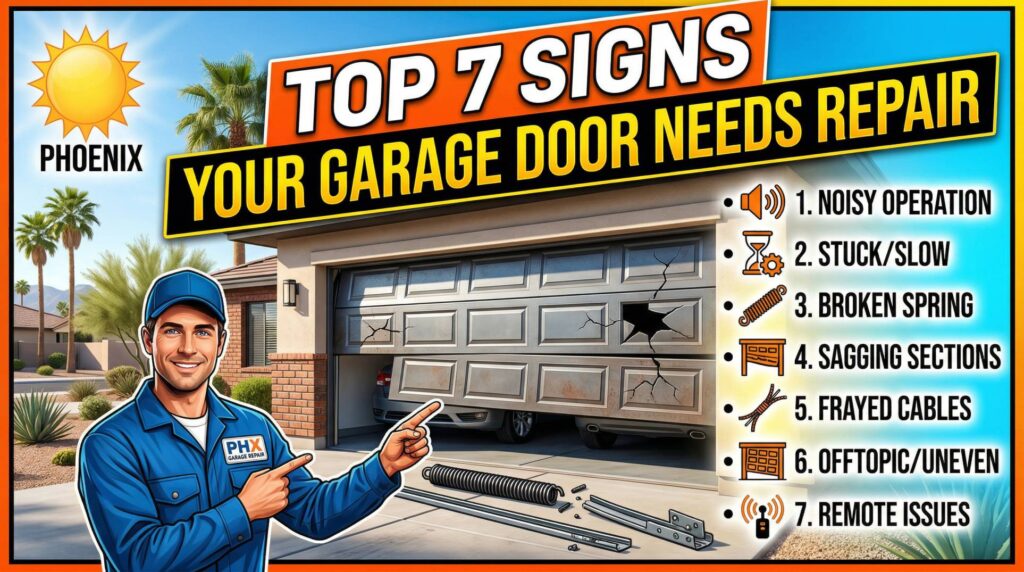
Your garage door serves as more than just an entry point—it’s a critical component of your home’s security, insulation, and daily convenience. In Phoenix, where extreme heat, dust storms, and occasional monsoons take a toll, garage doors face unique stresses that accelerate wear and tear. As a homeowner in this desert climate, spotting problems early can prevent costly breakdowns, enhance safety, and extend the life of your door. This guide breaks down the top 7 signs your garage door needs repair, offering practical diagnostics and solutions drawn from years of local experience. By addressing these issues promptly, you’ll avoid the frustration of a door that fails at the worst possible moment—like during a family gathering or late-night arrival.
1. Unusual Noises During Operation
One of the most common early warnings is unusual noises like grinding, squeaking, rattling, or banging when opening or closing your garage door. These sounds signal friction in components that should move smoothly.
Why it happens in Phoenix: The dry air here evaporates lubricants quickly, causing metal parts to rub harshly. Dust buildup in tracks and rollers exacerbates this, while loose hardware from thermal expansion adds rattles.
Problem-solving steps:
-
Listen closely: Operate the door manually (disconnect the opener) and note the noise source.
-
Quick check: Tighten loose nuts and bolts on hinges, tracks, and brackets using a wrench. Avoid over-tightening to prevent stripping.
-
Lubricate properly: Apply a silicone-based lubricant (not WD-40, which dries out) to rollers, hinges, springs, and the opener arm. Do this every 3-6 months in Phoenix’s climate.
-
When to call a pro: If noises persist, worn rollers or a failing spring might be the culprit—both require expert handling due to high tension.
Ignoring these sounds can lead to complete failure, stranding your vehicle outside in 110°F heat. Regular noise checks have saved countless Phoenix homeowners from emergency lockouts.
This close-up shows typical wear on garage door rollers, a frequent noise culprit in dusty environments like Phoenix.
2. Door Won’t Open or Close Fully
If your garage door hesitates, stops midway, or reverses unexpectedly, it won’t open or close fully. This disrupts your routine and poses security risks.
Phoenix-specific causes: Misaligned tracks from shifting foundations (common in expansive clay soils) or debris from haboobs blocking sensors.
Diagnostic and fix guide:
-
Sensor test: Check photo-eye sensors near the floor—clean lenses with a soft cloth and ensure they’re aligned (LEDs should glow steadily).
-
Track inspection: Look for bends, gaps, or obstructions. Gently tap minor bends back with a rubber mallet; clear debris.
-
Balance check: Disconnect the opener, lift the door halfway—it should stay put. If it slams or rises, springs need adjustment.
-
Opener reset: Unplug the unit for 30 seconds, then reconnect and reprogram remotes.
Safety note: Faulty auto-reverse (bumping into objects) indicates sensor or limit switch issues—test monthly by placing a box in the path. Persistent problems often stem from opener motor strain, best left to professionals.
3. Slow or Jerky Movement
A slow or jerky garage door moves unevenly, shaking or sticking along the way. This inefficiency signals imbalance or binding parts.
Local factors: Phoenix’s intense sun warps panels, while heat cycles loosen components.
Step-by-step resolution:
-
Visual scan: Inspect for sagging panels or frayed cables.
-
Manual operation: Lift and lower by hand—smooth motion is ideal.
-
Hardware tweak: Tighten track brackets and center the door in tracks (1/4-inch gap from rollers).
-
Roller upgrade: Replace cracked plastic rollers with nylon ones for quieter, smoother action.
Jerky movement strains the opener, shortening its lifespan. Addressing it early prevents a $500+ replacement.
4. Visible Physical Damage or Wear
Dents, cracks, rust, or sagging panels are obvious red flags. Even minor damage compromises structure and aesthetics.
Phoenix wear accelerators: Hail during monsoons dents steel doors; UV rays fade and warp materials; dust corrodes unprotected metal.
Inspection checklist:
-
Panels: Check for warping (lay a straightedge across).
-
Springs/cables: Look for rust, gaps, or frays—never touch under tension.
-
Seals: Probe for gaps allowing dust or pests.
DIY fixes: Patch small dents with auto body filler; replace peeling seals with vinyl weatherstripping. For structural issues, professional panel replacement ensures alignment and insulation.
Warped garage door panels from Phoenix heat exposure, highlighting the need for timely inspection.
5. Frayed Cables or Broken Springs
Frayed cables or broken springs (one side droops) are dangerous—springs counterbalance 90% of the door’s weight.
Why urgent in Phoenix: High cycle use (2-3x national average due to lifestyle) and dry heat embrittle metal.
Do-not-try warning: Springs store lethal force (400+ lbs). Signs include loud bangs or uneven lift.
Pro solution: Technicians safely unwind, replace torsion/extension springs, and rebalance. Expect $200-500 per side, but it averts accidents.
Annual spring checks are vital; they last 10,000 cycles or 7-10 years here.
6. Increased Energy Bills or Drafts
Rising energy costs or drafts near the door indicate poor sealing/insulation. Phoenix’s 20°F night drops make this noticeable.
Root causes: Worn bottom seals, gaps from misalignment, or uninsulated panels leaking conditioned air.
Energy-saving fixes:
-
Seal replacement: Slide in new rubber T-seals ($20-50 DIY).
-
Insulation audit: Add foam inserts if R-value is low.
-
Pest bonus: Tight seals block scorpions and crickets common post-monsoon.
Upgrading cuts AC bills by 10-20% in summer.
7. Opener Remote or Auto-Reverse Failures
Remotes not working or auto-reverse ignoring obstacles signal electrical or sensor woes.
Phoenix tweaks: Heat-fried batteries or dust-coated sensors.
Troubleshoot:
-
Replace remote batteries.
-
Realign sensors; check wiring.
-
Reset opener limits.
Malfunctions risk injury—especially with kids/pets. Test reverse weekly.
Maintenance Tips for Phoenix Homes
Prevent issues with quarterly checks:
-
Lubricate all moving parts.
-
Test safety features.
-
Clean tracks/seals.
-
Balance annually.
Phoenix’s climate demands vigilance—pro tune-ups twice yearly extend door life to 20+ years.
Summary
Recognizing these top 7 signs your garage door needs repair in Phoenix—noises, incomplete travel, jerkiness, damage, spring/cable issues, drafts, and opener glitches—empowers you to act before emergencies hit. Simple DIY steps handle minor woes, but complex repairs ensure safety and efficiency. Proactive care saves money and hassle in our demanding desert environment.
For reliable service, contact High Grade Garage Doors, Phoenix’s trusted experts in garage door repair. Call us at (602) 837-1888 for a free inspection today!