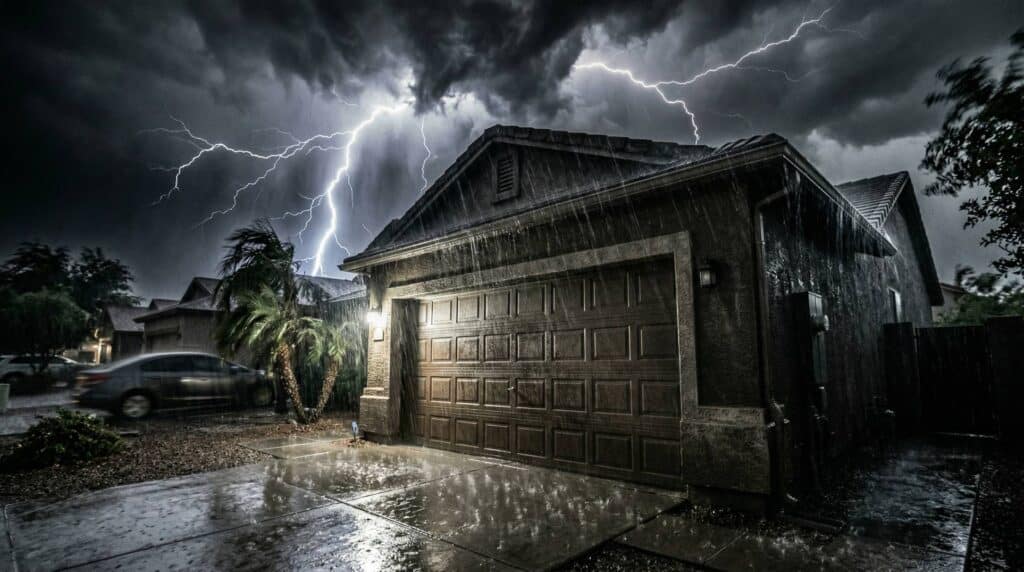
Phoenix’s monsoon season brings intense storms that test every part of your home. Garage doors often bear the brunt, facing high winds, heavy rain, and flying debris that can lead to costly repairs or replacements.
Understanding Phoenix Monsoon Risks
Monsoon storms in Phoenix typically run from mid-June to late September, delivering sudden downpours, gusts up to 70 mph, and haboobs filled with dust and debris. These conditions turn garage doors into prime targets, as wind pressure can warp panels or blow doors off tracks. Water intrusion follows, soaking interiors and promoting mold growth inside garages.
Homeowners frequently overlook garage doors until damage strikes. Unreinforced doors fail first, allowing debris to dent surfaces or flood the space. Proactive steps prevent these issues, saving thousands in fixes.
Common Garage Door Damage Types
High winds bend lightweight panels inward, creating gaps that worsen with each storm. Heavy rain overwhelms worn seals, leading to puddles inside that ruin stored tools, vehicles, or flooring.
Dust storms grind against tracks and hinges, accelerating rust and misalignment. Hail pummels surfaces, causing pits that compromise insulation and aesthetics. Older wooden doors swell from moisture then crack upon drying, while steel ones dent easily without bracing.
Flash floods push water under doors, eroding foundations over time. Each damage type compounds, turning minor wear into major failures.
Inspect Your Garage Door Now
Start with a full visual check before storms hit. Look for dents, cracks, or loose hardware on panels, tracks, and rollers. Test the door’s balance by disconnecting the opener and lifting manually—it should stay midway without effort.
Examine springs for rust or gaps, as they bear the door’s weight. Check cables for fraying, a sign of imminent failure. Tighten all bolts and nuts, especially after summer heat expansion.
Listen for unusual noises during operation, indicating misalignment. Park your car outside during inspections to access the full door face. Document issues with photos for repair planning.
Upgrade Weather Seals Effectively
Worn weatherstripping lets water and dust infiltrate easily. Replace bottom rubber seals first, as they contact the floor and wear fastest. Measure the door width, then cut new seals to fit precisely.
Peel off old adhesive-backed strips along sides and top, cleaning residue with soapy water. Install vinyl or rubber seals that compress fully when closed. Add a threshold seal on the garage floor to block low-level flooding.
Test by spraying a hose against the closed door—no leaks should appear inside. These upgrades cost under $50 in materials but prevent major water damage.
Reinforce Against High Winds
Standard garage doors collapse under 40-50 mph winds without support. Install vertical bracing kits with struts that span panel heights, securing them to the door frame.
Choose wind-rated doors meeting local building codes, rated for 120-150 mph gusts common in Phoenix. These feature thicker panels and reinforced tracks. Retrofit older doors with horizontal trusses if replacement isn’t immediate.
During storms, keep the door closed to avoid wind pressure buildup. Openers with battery backups ensure operation during power outages. Bracing adds years of storm resistance.
Choose the Right Materials
Steel doors dominate Phoenix homes for their durability against heat and hail. Opt for 25-gauge or thicker panels with double-wall insulation to maintain garage temperatures.
Aluminum doors resist rust but dent easily—pair with impact-resistant overlays. Avoid wood in monsoon zones, as it warps unpredictably. Composite options mimic wood’s look with better weather tolerance.
Insulated steel keeps interiors 20-30 degrees cooler in summer, reducing energy bills. Select neutral colors that match your home’s exterior for lasting appeal.
Maintain Tracks and Hardware
Clean tracks monthly, removing dust buildup with a shop vac. Lubricate rollers, hinges, and springs using silicone-based spray—avoid oil-based products that attract dirt.
Straighten bent tracks with a rubber mallet, but replace if cracks appear. Balance the door annually by adjusting spring tension—over-tight springs strain openers.
Inspect photo-eye sensors for spiderwebs or misalignment, as they prevent closing. Tighten set screws on rollers quarterly. Proper lubrication quiets operation and extends component life by 50%.
Protect Your Opener from Surges
Monsoon lightning triggers power surges that fry garage door openers. Plug into a surge protector rated for 2000+ joules, replacing it every 2-3 years.
Install a whole-house surge system for comprehensive coverage. Modern openers include built-in protection, but test monthly by simulating outages.
Battery backups allow 20-50 cycles during blackouts, keeping vehicles secure. Unplug during severe storms if possible. These steps safeguard electronics for under $100.
Prevent Flooding Inside Garages
Elevate stored items on pallets or shelves above expected flood levels. Install French drains along the garage perimeter to divert runoff.
Seal cracks in the concrete floor with hydraulic cement before rains start. Use flood barriers or sandbags at the door base during warnings.
Clear gutters and downspouts regularly to prevent overflow onto driveways. Grade soil away from the garage for natural drainage. These measures keep contents dry.
Storm-Time Best Practices
Monitor weather apps for thunderstorm warnings—close the garage door immediately. Avoid opening during gusts, as wind rushes in, stressing the structure.
Stay indoors away from windows, and never drive through dust storms or floods. After storms, inspect for hidden damage before resuming use.
Report downed power lines to utilities before approaching. Keep flashlights and manuals handy for manual operation. Preparation minimizes risks.
Long-Term Maintenance Schedule
Twice yearly, hire pros for 25-point inspections covering torque springs, bearings, and alignment. Spring in March and pre-monsoon in May.
Monthly DIY checks focus on seals, lubrication, and balance. Annual opener battery swaps prevent failures.
Track repairs in a log to spot patterns early. Consistent care halves repair frequency.
Cost of Ignoring Protection
A bent panel repair runs $200-500, full door replacement $1500-4000. Water damage inside adds mold remediation at $500+ per incident.
Wind-blown doors off tracks require $800+ in opener fixes. Proactive steps cost 10% of reactive repairs, preserving property value.
Signs Professional Help Is Needed
Grinding noises, uneven movement, or remote failures signal issues. Frayed cables or snapped springs demand immediate expert intervention—DIY risks injury.
Remote inconsistency or door reversal points to sensor problems. If the door trembles or shakes, tracks may be failing. Call when unsure.
Why Invest in Quality Now
Protected garage doors maintain home security, curb appeal, and functionality year-round. They withstand Phoenix’s extremes, reducing stress during storms.
Upgrades boost resale value by highlighting storm readiness. Peace of mind comes from knowing your largest entry point holds firm.
For reliable service, contact High Grade Garage Doors at (602) 837-1888. Our team specializes in monsoon-ready installations and repairs tailored to Phoenix homes.