A squeaky or sluggish garage door can disrupt your daily routine and signal underlying wear from Phoenix’s intense heat and dust. Proper lubrication keeps it running smoothly, prevents costly repairs, and extends its lifespan in our arid climate.
Why Garage Doors Need Regular Lubrication in Phoenix
Phoenix’s scorching temperatures and low humidity dry out metal parts quickly, causing friction, noise, and breakdowns. Garage doors endure hundreds of cycles yearly, with hinges, rollers, and springs bearing the brunt, leading to rust or seizing if neglected.
Dust from desert winds clogs tracks and attracts grime to unlubricated surfaces, worsening wear. Homeowners who lubricate every three to six months report fewer service calls and quieter operation, saving time and money.
Tools and Materials You’ll Need
Gather these essentials before starting: a high-quality garage door lubricant like white lithium grease or silicone spray (avoid WD-40, as it’s a cleaner, not a long-term lube), clean rags, gloves, safety glasses, and a sturdy ladder.
White lithium grease works best for springs and bearings due to its thick consistency that resists drying in heat. Silicone spray suits rollers and hinges for its non-sticky finish that repels dust.
Keep a small brush handy for precision application, and ensure your workspace is well-lit to spot trouble areas.
Safety Precautions Before You Begin
Disconnect the garage door opener by pulling the red emergency release cord to avoid accidental activation. Wear gloves and glasses to protect against spray or debris, especially around high-tension springs.
Never adjust or lubricate springs under tension yourself—these can snap with lethal force. Test the door’s balance first: lift it halfway; it should stay put. If not, call a professional immediately.
Position your ladder securely on level ground, and work with the door closed initially for easier access.
Step-by-Step Guide to Lubricating Your Garage Door
Step 1: Clean Tracks and Rollers Thoroughly
Start with tracks, as dirt buildup in Phoenix’s dusty environment causes most sticking issues. Use a vacuum or soft brush to remove debris, then wipe with a dry rag—never use water, which promotes rust.
Inspect rollers for wear; lubricate nylon ones sparingly, but skip plastic to avoid swelling. Open and close the door manually several times to distribute cleaner paths.
Step 2: Lubricate the Rollers
Apply lubricant directly to the bearings where wheels meet axles, not the wheels themselves. A light spray or dab of grease per roller suffices—excess attracts more dust.
Roll the door up and down by hand to work it in. In Phoenix heat, this prevents the common “grinding” noise from dry bearings.
Step 3: Target the Hinges and Pivot Points
Locate metal hinges connecting door panels and spray or brush lubricant into pivot points where parts rub. Work it in by manually bending panels.
Phoenix’s dry air makes hinges squeak first, so this step quiets operation significantly. Wipe away drips to keep floors slip-free.
Step 4: Handle Springs with Precision
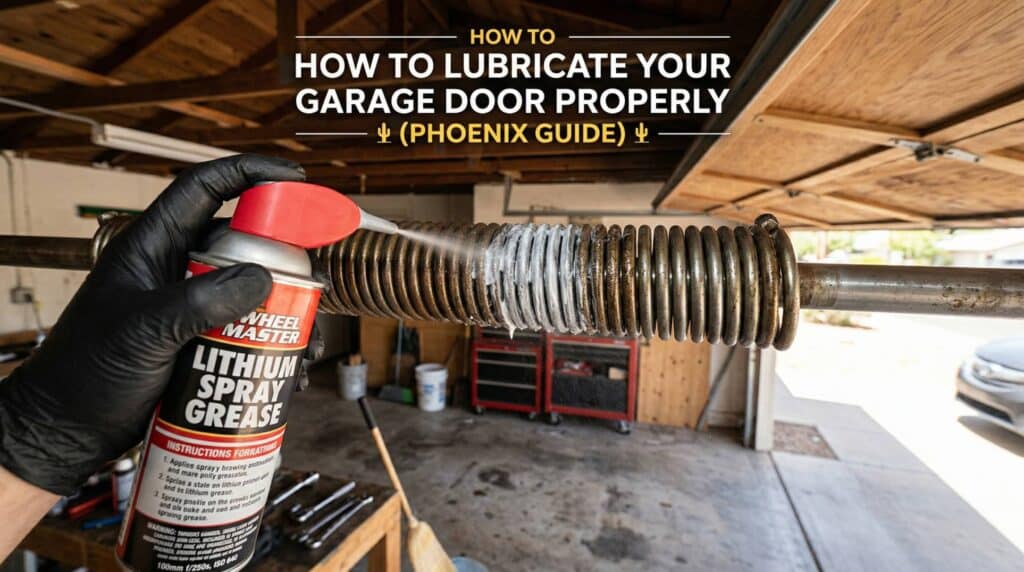
For torsion or extension springs above the door, use white lithium grease applied by hand or extension tube for full coverage. Springs flex constantly, so lubrication reduces fatigue cracks.
Avoid over-application; a thin coat penetrates coils without gumming up. If springs look rusted or frayed, stop and seek expert help.
Step 5: Grease the Lock Mechanism and Arm Bar
Spray locks, handles, and the opener’s arm bar lightly to prevent sticking. Operate the lock a few times to spread it evenly.
This ensures smooth manual operation during power outages, common in Arizona summers.
Step 6: Final Checks and Reconnect
Reconnect the opener, then test full cycles five to ten times. Listen for smooth, quiet movement without grinding or hesitation.
Tighten any loose hardware with a wrench, and clean excess lube to avoid dust buildup.
Best Lubricants for Phoenix Conditions
White lithium grease excels for heavy-duty parts like springs, staying put in 110°F+ heat. Silicone lubricants prevent rust without attracting grit, ideal for tracks and rollers.
Steer clear of household oils or WD-40; they evaporate fast here.
Common Mistakes and How to Avoid Them
Over-lubricating creates sticky messes that trap Phoenix dust, leading to faster wear. Use a “less is more” approach—one or two sprays per spot.
Ignoring tracks causes roller derailment; always clean first. Skipping balance tests risks opener strain or door drops.
Neglecting annual full inspections lets small issues like worn cables escalate into $500+ repairs.
Maintenance Schedule for Longevity
Lubricate every three months in Phoenix due to rapid drying—more often for high-use doors. Clean tracks monthly and inspect visually weekly.
Pair with seasonal checks: tighten bolts in spring, test safety sensors in summer heat waves.
Signs Your Garage Door Needs Urgent Attention
Grinding noises indicate unlubricated or failing parts. Uneven movement or door reversal points to imbalance.
Frayed cables, visible spring gaps, or remote failures demand pro service immediately to prevent accidents.
Benefits of Professional Maintenance
DIY lubrication handles basics, but pros spot hidden issues like misaligned tracks or worn gears early. In Phoenix, certified techs use specialized tools for safe spring work.
Regular service boosts energy efficiency by ensuring tight seals against hot air infiltration.
Troubleshooting Noisy Doors Post-Lubrication
If noise persists, re-clean tracks—dust hides under fresh lube. Check for bent rollers from impacts.
Persistent issues often trace to opener chain tension; adjust per manual or call experts.
Phoenix-Specific Tips for Garage Door Care
Our alkaline soil and monsoons corrode metal fast, so rinse tracks post-storms. UV exposure fades panels; repaint every few years.
High winds stress hinges—inspect after gusts. Insulated doors retain cool air better, reducing AC strain.
When to Replace vs. Repair Parts
Replace rollers every 5-7 years, as plastic wears thin. Springs last 10,000 cycles; pros calculate based on use.