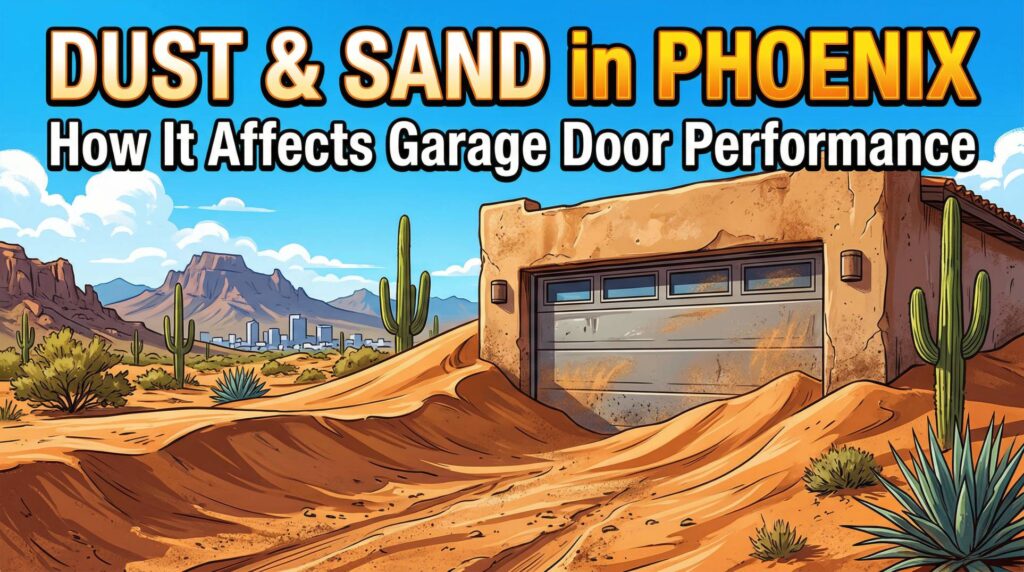
Living in Phoenix means dealing with relentless sun, scorching heat, and frequent dust storms that blanket everything in fine grit. This desert environment takes a toll on garage doors, where dust and sand infiltrate critical components, leading to friction, wear, and unexpected breakdowns. Understanding these effects empowers homeowners to protect their investment and maintain smooth operation year-round.
Hidden Damage from Dust Buildup
Dust storms in Phoenix deposit abrasive particles that settle into garage door tracks, rollers, and hinges. Over time, this buildup creates friction, forcing the door to grind rather than glide smoothly. Homeowners often notice unusual noises or jerky movements as early warning signs.
The fine particles act like sandpaper on metal surfaces. Rollers wear down prematurely, tracks become misaligned, and hinges lose their flexibility. Without intervention, this accelerates component failure, turning a minor annoyance into a major repair need. Regular inspection reveals these issues before they escalate.
How Sand Accelerates Wear and Tear
Sand’s gritty texture infiltrates lubrication, forming a thick paste that gums up moving parts. In Phoenix’s dry climate, this mixture hardens, increasing strain on the garage door opener motor. Doors start operating louder and slower, signaling reduced efficiency.
Prolonged exposure weakens springs and cables, which bear extra load from binding tracks. Abrasive sand erodes roller bearings, leading to wobbling or complete seizing. Heat amplifies this by expanding metal parts unevenly, compounding the misalignment caused by debris.
Common Problems After Dust Storms
Post-storm, garage doors face immediate threats like clogged sensors and compromised seals. Dust obscures photo-eye sensors, preventing safe operation and triggering constant reversals. Seals around the door bottom crack or gap, allowing more sand inside.
Wind-blown debris dents panels during high-speed gusts, weakening structural integrity. Tracks fill with sand, causing the door to bind midway and overwork the opener. These issues peak during monsoon season when humidity mixes with dust, promoting rust in hidden spots.
Impact on Garage Door Openers
Opener motors in Phoenix homes strain against dusty resistance, shortening their lifespan. Dust-coated gears grind internally, while sand-clogged chains or belts slip under load. Overheating becomes common in summer, as motors compensate for friction.
Electrical components suffer too—dust infiltration leads to short circuits or sensor failures. Remote signals weaken if grime coats antennas, frustrating daily use. Addressing opener-specific dust means specialized cleaning to restore reliable performance.
Seals and Weatherstripping Breakdown
Phoenix’s extreme temperature swings dry out rubber seals, making them brittle. Sand wedges under these seals, widening gaps that invite more debris and pests. Air leaks follow, raising energy bills as conditioned air escapes.
UV exposure from intense sun fades and cracks weatherstripping faster in sandy conditions. Replacement seals must withstand desert abuse to maintain a tight barrier. Proper installation prevents the cycle of infiltration and deterioration.
Step-by-Step Cleaning Guide
Start by disconnecting the opener for safety, then use compressed air to blow dust from tracks and rollers. Avoid water initially to prevent mud formation.
Wipe tracks with a damp microfiber cloth, focusing on curves where sand hides. Vacuum rollers and hinges thoroughly before lubrication.
Apply silicone-based lubricant—ideal for dusty climates as it repels grit unlike oil. Work it into all moving parts sparingly to avoid excess attraction of debris.
Test the door multiple times after cleaning, listening for smooth operation. Repeat monthly or post-storm for best results.
Choosing the Right Lubricants
Silicone sprays outperform petroleum-based options in Phoenix by not turning gummy with sand. They provide long-lasting protection against friction without collecting more dust.
Look for high-temperature formulas rated for desert extremes. Avoid grease on rollers, as it traps abrasives.
Lubricate every three months, or more in high-wind areas. Proper choice extends hardware life significantly.
Seasonal Maintenance Schedule
Spring (March-May): Clear winter dust from tracks and test sensors. Lubricate after dry spells and inspect seals post-storm.
Summer (June-August): Check for heat-induced expansion in tracks. Apply UV protectants and monitor motor performance.
Fall (September-November): Prepare for monsoon dust with deep cleaning. Tighten hardware loosened by summer heat.
Winter (December-February): Focus on sand buildup from winds. Verify opener function in cooler temps.
Follow this routine to preempt desert-related failures.
Upgrading for Desert Durability
Install wind-resistant doors with reinforced panels to deflect flying sand. Steel or aluminum with powder coatings resists dents and corrosion.
Add heavy-duty tracks and sealed rollers designed for abrasive environments. Smart openers with dust-proof housings enhance reliability.
Consider threshold seals that snap into place, blocking sand at the base. These upgrades pay off through fewer repairs.
Signs You Need Professional Help
If cleaning doesn’t resolve binding or noises persist, call experts. Uneven door movement indicates track misalignment beyond DIY fixes.
Broken springs from sand wear demand immediate attention—never attempt DIY due to danger. Opener failures or sensor issues often require recalibration.
Professionals diagnose hidden damage like cable fraying accelerated by grit.
Cost of Ignoring Dust Damage
Neglect leads to full door replacements costing $1,500-$5,000, far exceeding maintenance at $100-300 annually. Opener burnout alone runs $400+.
Frequent breakdowns disrupt routines, especially for busy Phoenix families. Property value dips if garage issues signal poor upkeep.
Early action saves thousands long-term.
Preventive Sealing Techniques
Apply high-quality bottom seals and side sweeps tailored for sand. Vinyl or T-style seals flex without cracking in heat.
Use magnetic seals for uneven floors common in older homes. Kerfs filled with bulb seals block top gaps effectively.
Reapply annually to combat UV degradation.
Heat and Dust Synergy
Phoenix highs over 110°F expand tracks, trapping sand tighter. Night cools contract parts, grinding abrasives deeper.
This cycle hastens fatigue in springs and rollers. Heat also evaporates lubricants faster, worsening friction.
Insulate doors to moderate internal temps, easing mechanical stress.
Real Phoenix Homeowner Stories
Many locals report doors failing post-habub (dust storm). One homeowner’s opener burned out after ignoring gritty tracks, costing $800.
Another saved by quarterly pro tune-ups, avoiding $2,000 replacement. These cases highlight proactive care’s value.
Long-Term Protection Strategies
Park cars outside during storms to shield the door. Install awnings or screens for extra barriers.
Schedule bi-annual pro inspections for thorough deep cleans. Invest in smart monitoring for early alerts.
Combine habits for a resilient garage door system.
Why Phoenix Homes Need Extra Vigilance
The Valley’s 300+ sunny days and haboobs deliver unmatched dust loads. Homes near construction or washes face intensified exposure.
Local codes favor durable materials, rewarding prepared owners. Consistent care ensures peak performance amid desert challenges.
For reliable solutions tailored to Phoenix’s unique conditions, contact High Grade Garage Doors at (602) 837-1888. Their experts handle cleaning, repairs, and upgrades to keep your door dust-free and dependable.